Guide
Privacy Wooden Fence Ideas: Which Layout Fits Your Yard?
Compare privacy wooden fence ideas for Romeoville area yards, including solid boards, horizontal layouts, costs, and permit questions. Get a free fence estimate
Published by Romeoville Fence · Updated
If you are comparing privacy wooden fence ideas for a Romeoville area yard, start with a solid board layout for the most straightforward visual screening. Consider board on board for an overlapping look, horizontal boards for a different visual style, or a decorative top if you want privacy without a completely solid appearance. The right choice depends on which views you need to block, how you want the fence to look from inside the yard, your budget, and the rules that apply to your property.
Choose the wood fence layout that solves your privacy problem
A privacy fence is not one fixed design. A fence that screens a neighboring patio may need a different layout from one that frames a garden or separates a side yard from a sidewalk. Before choosing a photograph you like, stand where you actually want privacy and identify the view you want to interrupt. That simple step makes it easier to compare designs by what they would do in your yard rather than by appearance alone.
These six options are ranked for a homeowner who wants a useful starting point for a wood fence installation, not as a claim that one design wins on every property. The first five are layout choices. The sixth is an installation and estimate path for someone who has a preferred look but needs help turning it into a workable fence plan. Romeoville Fence offers wood fence installation and a way to request a free estimate. Its listed service area includes Romeoville, Bolingbrook, Plainfield, Lockport, Crest Hill, and Lemont. Check its service area information when planning a local project.
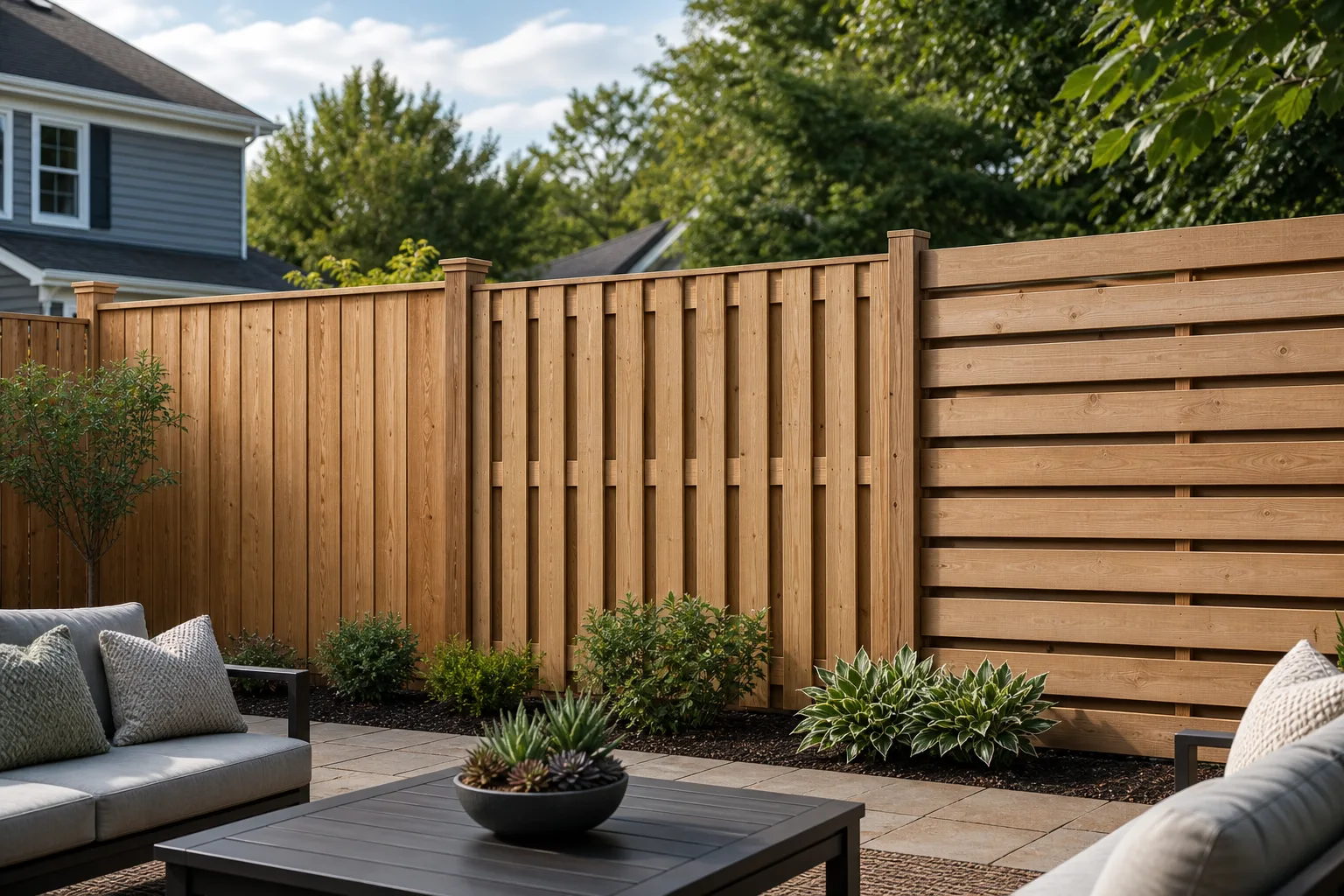
What matters when comparing privacy fence ideas
- Actual sight lines: Decide whether you need to screen views at seated eye level, standing eye level, or both. A layout that looks private in a close photograph may leave visible spaces from another angle.
- Appearance from both sides: Think about what you will see from your patio and what a neighbor or passerby will see. Ask how posts, rails, and board placement affect each face.
- Budget clarity: Compare estimates for the same approximate fence length, height, material choice, and gate needs. Changing several details at once makes prices harder to interpret.
- Maintenance expectations: Ask what care your chosen wood and finish may need. Do not assume two layouts will have identical upkeep simply because both use wood.
- Property constraints: Confirm the relevant local rules, property line information, and any other requirements before settling on a height or adding an extension to an existing fence.
The ranking favors layouts that directly address visual privacy and are easy to describe when requesting an estimate. It does not represent field testing, a price ranking, or a promise that every design is appropriate on every lot. Where two ideas seem equally appealing, use the location of your privacy problem to break the tie.
1. Solid vertical boards for straightforward screening
A solid vertical board fence is the clearest starting point when the main goal is to reduce views into a yard. Closely placed upright boards create a simple visual boundary, and the familiar pattern makes it easier to picture along a rear property line or beside a patio. It ranks first because a homeowner can explain both the desired look and the privacy goal without relying on decorative details.
Choose this direction if you want the fence itself to do most of the visual screening. For example, if a neighboring window overlooks the place where you sit outdoors, mark that area first and ask how the proposed fence height and board layout would affect the view. Walk the proposed line in both directions as you consider the design. A section that works behind a patio may need a different gate location or transition near the side of the house.
Its limitation is that a simple concept still needs careful specification. Board spacing, changes in grade, gate gaps, and the view from either side can change the result. Wood also changes with exposure, so do not treat a drawing of closely placed boards as a guarantee that no narrow gaps will ever be visible. Ask what the estimate includes and what the finished fence will look like from your most important viewing position.
2. Board on board for an overlapping appearance
Board on board uses overlapping vertical boards rather than relying only on boards placed edge to edge. That layered appearance is worth considering when you want a visually substantial fence and are concerned about how spaces between boards could affect privacy. It ranks behind a basic solid board layout because the added visual detail may appeal to some homeowners but is not necessary for everyone.
This option fits a rear yard used for sitting, play, or outdoor meals when several neighboring sight lines matter. Suppose you are comparing two proposed fences along the same boundary. Ask to see how each layout handles the spaces between boards, then compare the appearance from your yard rather than selecting solely from a front view. If you are considering a gate, ask whether its board pattern will visually match the adjoining sections.
The limitation is that overlap does not answer every privacy question. Fence height, changes in terrain, and views from above the fence still matter. The layered layout may also affect the amount of material and work involved, but an actual price difference depends on the proposed project. Request estimates based on comparable dimensions instead of assuming board on board has a particular cost.
3. Horizontal boards for a distinct yard facing view
Horizontal wood boards change the visual direction of a privacy fence. They can make the fence a prominent part of the yard design, which may be appealing when you spend time looking toward it from a patio or outdoor seating area. This option ranks third because it can address privacy while offering a noticeably different appearance, but its details deserve close attention before you commit.
It is a good fit if you have a clear view from your house to the fence and care about the pattern you will see every day. Picture a patio facing a long rear boundary: a horizontal layout may be the design feature you want, while a shorter side section might be better treated as a practical screen. Ask how board spacing and any changes in ground level will look across the complete run, not just in a small sample image.
The limitation is that the phrase horizontal fence does not tell you whether the proposed boards will create the degree of screening you expect. Some designs intentionally leave visible spaces. Discuss the exact layout, the view through it, and how gates and corners will be handled. If price is a deciding factor, compare a specified horizontal proposal against a specified vertical proposal for the same portion of the yard.
4. Shadowbox boards when appearance on both sides matters
A shadowbox pattern places boards on alternating sides of the fence structure. It is an idea to explore when you care about the appearance facing both your yard and a neighboring property. It ranks fourth for a privacy focused search because its alternating pattern may allow angled views through the fence, depending on the layout.
Consider shadowbox when a shared boundary is highly visible from both sides and you prefer its patterned look to a plain solid face. For instance, if your seating area is set back from the fence and your main goal is defining the yard with some screening, it may be worth comparing. Stand at the positions where privacy matters, including near the boundary, and ask how much of the adjacent space could be visible from each angle.
Its main limitation is the distinction between a fence that feels screened from a distance and one that blocks specific sight lines. Do not select shadowbox solely because a photograph looks opaque when viewed straight on. If blocking a direct view into a patio is essential, compare it with a solid board or overlapping layout before requesting a final design.
Have a fence line and two preferred layouts in mind? Describe them when you Get a free estimate.
5. Solid boards with a decorative top for a lighter visual finish
A solid lower section with a decorative top is a compromise between screening and ornament. Homeowners often look at lattice or another open pattern above the main boards when they want the fence to feel less visually heavy. It ranks fifth because the opening at the top is a design choice that may work against a privacy goal if the unwanted view passes through that area.
This idea fits a yard where the main concern is a ground level view across the property line, but you would welcome a more detailed appearance above it. Imagine a garden sitting area where a solid lower section interrupts a view from the sidewalk. Before choosing a decorative top, check the sight line while standing and while seated. A pattern that looks attractive near the fence may offer less screening from a raised window or a higher neighboring yard.
The limitation is not simply that the top is open. It is that the open portion must be included when you assess the fence as a whole. Confirm the proposed overall height and whether that height is permitted for the particular location. If complete visual screening is the priority, a solid upper section may be a better use of the available fence height.
6. A tailored wood fence estimate when your preferred design needs a real plan
This final entry is a service path rather than a sixth board pattern. Once you have identified your preferred privacy wooden fence ideas, a wood fence installation estimate can help you compare a proposed layout for your actual yard. Romeoville Fence lists wood fence installation and free estimates, with estimate contact available by form or email at estimates@romeovillefence.com. It belongs last because choosing a service does not replace deciding what kind of privacy you need.
This path fits a homeowner in Romeoville or another listed service area who has narrowed the choice to a couple of designs and wants to discuss the fence line, height, gates, and material. A useful request might describe a solid board fence behind the patio, a gate near the side yard, and a second quote question about a board on board appearance. Include the location of the views you want to block. The more specific the request, the easier it is to discuss comparable options.
The limitation is that a free estimate should not be mistaken for proof that a selected design meets every property requirement. Check applicable permit and yard rules before treating any preferred height or fence placement as settled. If you are still choosing between wood and other materials, Romeoville Fence also lists vinyl, aluminum, and chain link installation. Those materials may deserve a separate comparison, but they are not substitutes for a wood design you have chosen for its particular appearance.
Compare wood fence costs without losing sight of the design
Cost is easier to discuss after you define the project. Start with the approximate fence line, the intended height, the number and location of gates, and the one or two layouts you want compared. If one proposal includes a different height, gate arrangement, or wood choice, do not treat the bottom line as a direct comparison of designs. Ask which details changed and why they matter for your yard.
If treated wood is on your shortlist, the treated wood fence cost guide for Romeoville area yards is a useful next step for framing price questions. When comparing treated wood with cedar, request the wood choice and relevant construction details in each proposal. Do not assume the lower initial quote will be the better fit if the appearance or care requirements differ from what you want.
Reviews and project photographs can help you decide what questions to ask, but check their relevance. A photograph of a short decorative fence will not resolve how a long privacy run might look in your yard. Look for the board pattern, gate treatment, and view from the side that matters to you. Treat any quoted price you find elsewhere as context, not as a price for your specific fence line.
To compare wood fence layouts for your property, Get a free estimate.
Check height and property rules before choosing the final look
A design can look right and still need changes once you check where it will go. Rules may differ by municipality and by the fence location on the property. Before committing to a height, an extension, or a section near the front of the yard, verify the requirements that apply to your address. Confirm property line information separately rather than guessing from a lawn edge, an old fence, or a neighbor's landscaping.
This matters especially if your privacy plan depends on extra height. A wood fence extension for privacy may seem simpler than replacing an existing fence, but you still need to consider the existing structure and applicable rules. Do not assume an extension is allowed or that the old fence can support the change. If your property is outside Romeoville, confirm both coverage and the rules for your municipality. Homeowners comparing nearby locations can start with the Will County fence service area guide, then verify requirements for their own address.
Which privacy wood fence idea should you choose?
Choose solid vertical boards if your priority is a clear, uncomplicated screen along a patio or rear yard. Compare board on board if you like a layered look and want to examine how the proposed layout handles spaces between boards. Choose horizontal boards when the fence is also an important part of the view from your home, but specify the spacing before assuming it will provide the privacy you want.
Consider shadowbox if appearance from both sides matters more than blocking every angled view. Choose a decorative top only when you are comfortable with less screening in that upper portion. If you have narrowed the options but need help applying them to your fence line, request a wood fence estimate with your preferred layout, gate needs, and privacy concern clearly described. For a Romeoville area project, you can also email estimates@romeovillefence.com.
Ready to turn your preferred layout into a project discussion? Get a free estimate.
Questions to settle before requesting a privacy wood fence
Which wood fence style gives the most privacy?
A closely planned solid board layout is the most direct option in this list when visual screening is the main goal. Board on board is also worth comparing. Neither name guarantees a particular result: ask about the proposed height, board placement, gate gaps, terrain changes, and the views you want to block.
Is a horizontal wood fence private?
It can provide screening, but privacy depends on the specific spacing and where people will view it from. Ask to see how the proposed horizontal boards, corners, and gates would work along your fence line. Do not assume every horizontal design is solid.
Should I choose treated wood or cedar for a privacy fence?
Compare proposals that specify the wood choice, layout, dimensions, finish expectations, and price for your yard. Ask about the appearance and care you can expect from each proposed option rather than relying on a general claim that one is always better. The right choice depends on which proposal meets your priorities and budget.
Can I add height to my existing wood fence for more privacy?
Possibly, but do not plan an extension without checking the existing fence and the requirements for your property. Verify the applicable height and yard rules, then ask whether modifying the current structure is appropriate or whether a new fence section would be the better option.