Guide
Which Fence Types Make Sense for Your Romeoville Yard?
Compare vinyl, wood, aluminum, and chain link fence types for Romeoville area homes and get a free estimate from a local source. See how.
Published by Romeoville Fence · Updated
Homeowners in Romeoville, Bolingbrook, Plainfield, Lockport, Crest Hill, and Lemont typically choose between four fence types: vinyl, wood, aluminum, and chain link. Each handles privacy, pets, budget, and Illinois weather differently, and the right pick depends on your lot, your HOA rules, and what you are trying to solve. You can request a free estimate by form or email through romeovillefence.com once you know which direction fits your yard.
You Do Not Need a Catalog, You Need the Right Fence for Your Lot
Most people searching fence types are not trying to become fencing experts. They are standing in a backyard in Plainfield or Lockport trying to answer a narrower question: will this keep the dog in, will the HOA approve it, and what will it actually cost once materials and labor are added together. The friction usually comes from comparing specs on manufacturer sites that never mention local permit rules, Illinois frost depth, or the HOA height limits common across Will County subdivisions.
That gap between generic product pages and your specific yard is where most fence decisions stall. A fence type that works great in a dry climate photo online may not account for the clay soil and freeze thaw cycles common in this region, which affect how deep posts need to be set and how a wood fence holds up over a few winters.
Matching the Fence Type to the Job It Needs to Do
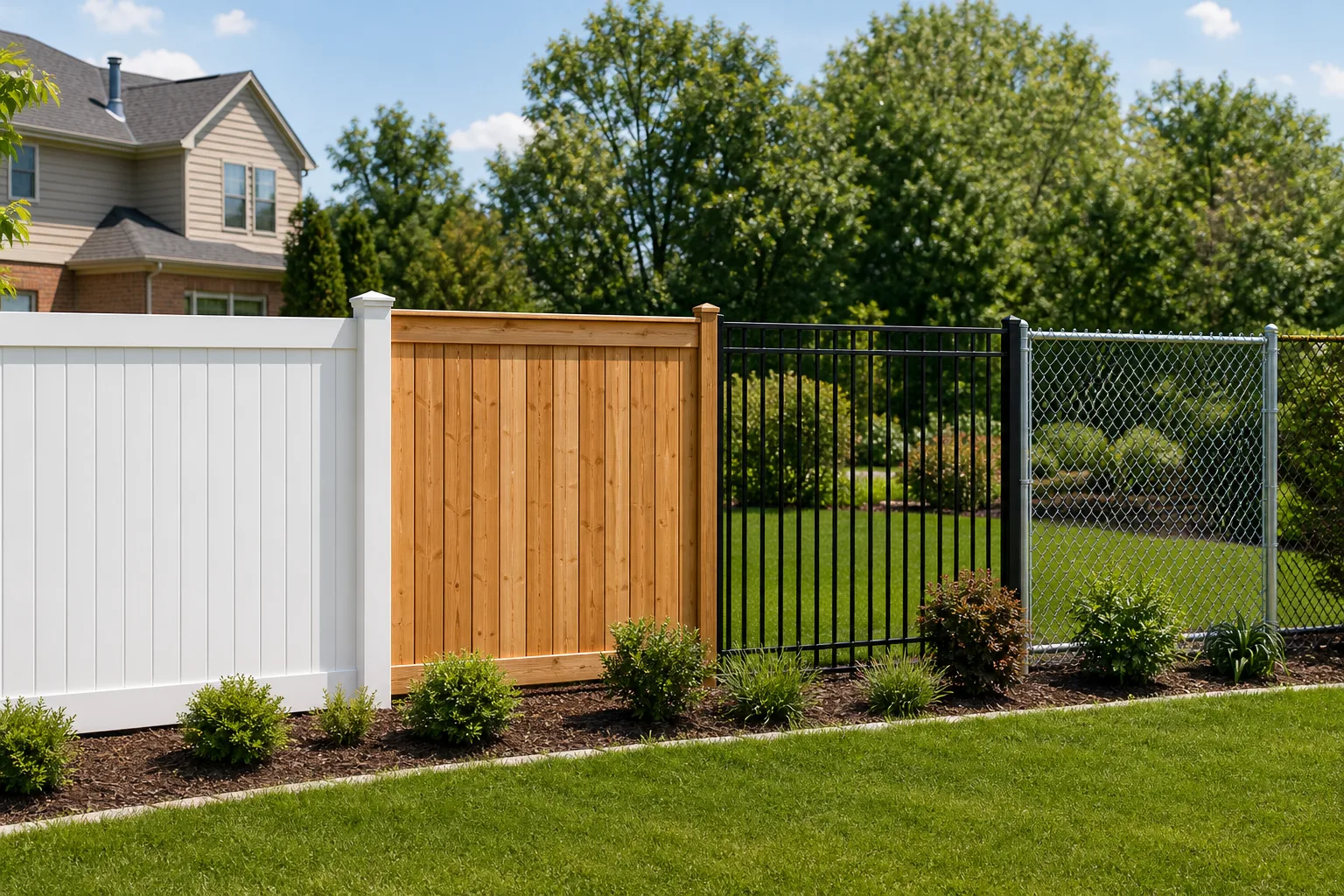
Instead of starting with material, start with the problem the fence needs to solve. Here is how the four core types usually line up with common situations in Romeoville and nearby towns:
- Vinyl fencing: best when you want low maintenance and consistent appearance year after year, especially for corner lots in Bolingbrook or Plainfield where the fence is visible from two streets.
- Wood fencing: chosen for privacy and a traditional look, but it needs more thought around treated lumber versus cedar and ongoing upkeep. If you are weighing those two options directly, see our breakdown on treated wood fence cost for Romeoville area yards.
- Aluminum fencing: a common pick for pool code compliance and open sightlines, since it provides a boundary without blocking a view, which matters on smaller lots in Crest Hill and Lemont.
- Chain link fencing: usually the practical choice for containing pets or marking a property line on a budget, particularly in Lockport and other towns where function matters more than style.
If privacy is the main driver, it helps to look at layout before material. Our guide on privacy wooden fence ideas and which layout fits your yard walks through panel height and placement choices that apply whether you land on wood or a privacy style vinyl panel.
Not sure which type fits your lot yet? Get a free estimate and describe your yard, we will respond with options.
From Photo and Measurements to a Fence Estimate
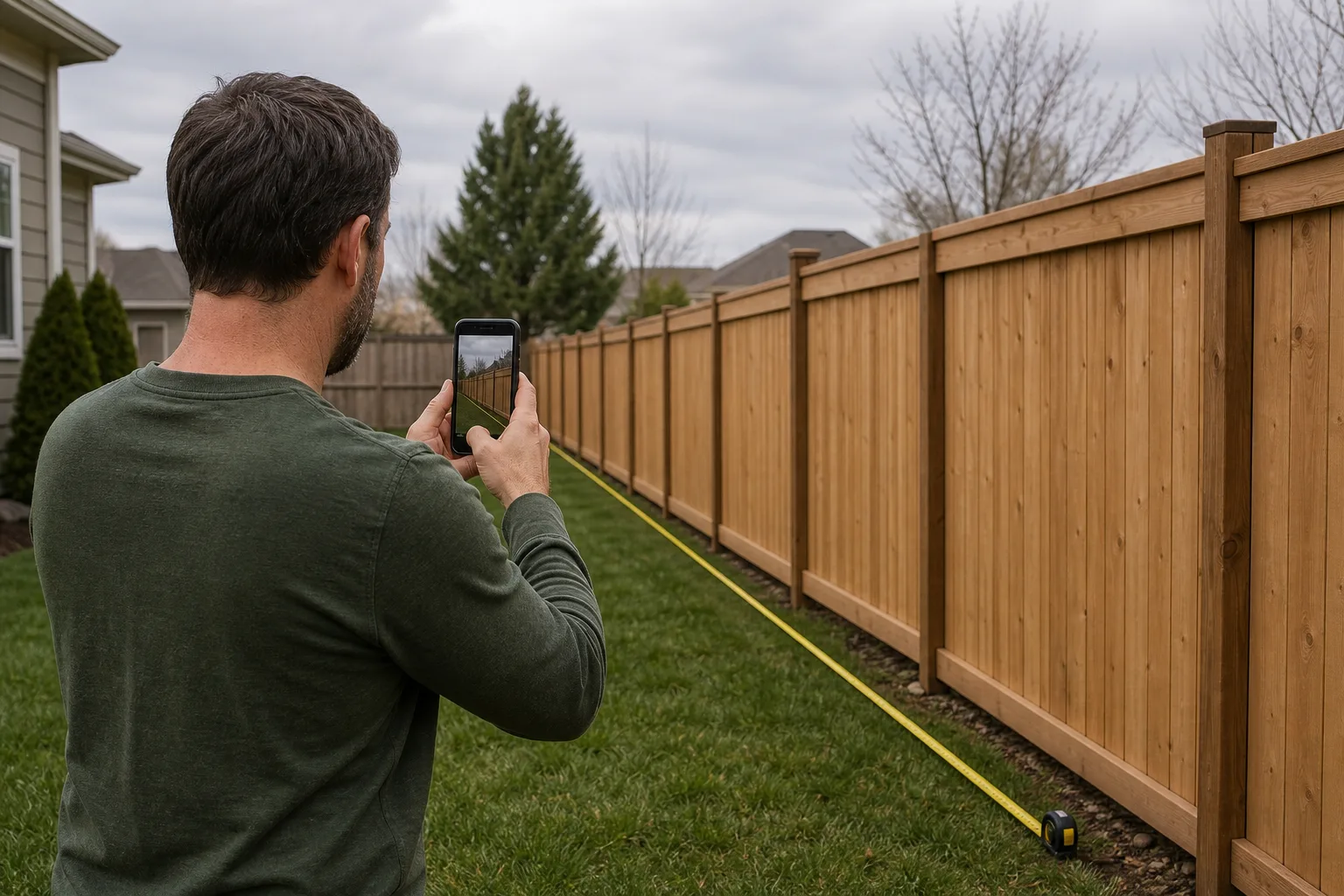
A typical path looks like this: a homeowner in Plainfield with a corner lot and two dogs sends a few photos and rough dimensions to estimates@romeovillefence.com, mentions they want low upkeep and a secure pet boundary, and gets back estimate options that compare vinyl against chain link for that specific yard, along with notes on height limits that may apply locally. You can also submit the same details through the form on romeovillefence.com if email is not convenient.
Before this kind of process, the alternative is usually calling several installers, reading conflicting advice online, and guessing at permit requirements. After it, you have a side by side comparison tied to your actual lot instead of a generic price range pulled from an unrelated zip code.
Permit and yard rule questions come up constantly in this area, especially around height limits near corner lots and shared property lines. Rather than guessing, check the local guidance linked from the service area page before finalizing a fence type, and if you are outside Romeoville proper, our page on fence coverage across Will County IL outlines which nearby towns are served.
What You Can Actually Verify Before You Commit
There are a few honest reasons to trust this process over guessing from a product catalog:
- Estimates are free and can be requested by form or direct email, so there is no cost to comparing fence types before deciding.
- Local permit and height or yard rule guidance is linked directly rather than buried in fine print, so you are not surprised after installation.
- Coverage spans Romeoville, Bolingbrook, Plainfield, Lockport, Crest Hill, and Lemont, so the advice reflects conditions common to this part of Illinois rather than a national average.
This page does not claim a specific crew size, licensing history, or years in business, because those details are not published on the site and should not be assumed. If that information matters to your decision, ask for it directly when you request your estimate.
Addressing the Two Questions Everyone Asks
Isn't chain link just the cheapest option and good enough? Often yes, if the only goal is containment on a budget. But chain link offers no privacy and limited curb appeal, so if you are planning to sell within a few years or your yard faces a shared sightline with neighbors in Crest Hill or Lemont, a mid range vinyl or aluminum option may hold value better even at a higher upfront cost.
Is treated wood really cheaper than cedar long term? Treated lumber usually costs less upfront, but cedar resists warping and insect damage better over time, which can change the real cost picture over several winters. If this tradeoff is your main question, the detailed comparison on treated wood fence cost walks through it without assuming one answer fits every yard.
Get a Straight Answer on Your Fence Type and Cost
You do not need to pick a material in the dark. Send your yard details and the problem you are solving, privacy, pets, budget, or HOA compliance, and get back options specific to your address in Romeoville, Bolingbrook, Plainfield, Lockport, Crest Hill, or Lemont.
Get a free estimate and get a comparison built around your lot, not a generic price list.
Prefer to skip the form? Get a free estimate by emailing estimates@romeovillefence.com with a few photos and your rough fence line length.
Fence Type Questions From Local Homeowners
What is the most common fence type for homes in Romeoville and nearby towns?
Vinyl and wood privacy fences are the most requested for residential backyards in this area, while chain link remains common for larger side yards and pet containment on a budget.
Is vinyl or wood better for Illinois winters?
Vinyl tends to hold up with less seasonal maintenance since it does not warp or rot the way untreated wood can after repeated freeze and thaw cycles, though a well maintained cedar fence can also perform well over time.
Do I need a permit for a new fence in Will County?
Permit and height rules vary by municipality, which is why local guidance is linked directly from the service area page instead of assumed to be the same everywhere.
How does chain link compare on cost to wood or vinyl?
Chain link is generally the lower cost option for straightforward boundary or pet containment needs, while wood and vinyl cost more but add privacy and curb appeal, see our note on coverage for chain link options for Bolingbrook, Plainfield, Lockport, Crest Hill, and Lemont for more detail.
Can I mix fence types on the same property, like aluminum in front and wood in back?
Yes, many homeowners pair an open aluminum fence near the front for curb appeal with a taller wood or vinyl privacy fence in the back, as long as it fits local height rules for each section of the yard.