Guide
what s code allows in your yard: Wondering What Code Allows in Your Yard Before You Build a Fence?
Learn how what s code allows in your yard works, what to compare, and how to choose the right next step for your team.
Published by Romeoville Fence · Updated
What code allows in your yard depends on which municipality you live in, since Romeoville, Bolingbrook, Plainfield, Lockport, Crest Hill, and Lemont each set their own rules for fence height, setbacks, and permit requirements. Rather than guess, Romeoville Fence links you directly to local permit and yard rule information as part of your free estimate, so you know what is allowed before any post goes in the ground.
Figuring Out What Your Yard Code Actually Allows
Most homeowners do not find out what their yard code allows until they are already standing in the aisle at the hardware store or mid way through a project. The confusion is understandable. A backyard fence often faces different height and material rules than a front yard fence. Corner lots can have visibility restrictions that interior lots do not. And because Romeoville, Bolingbrook, Plainfield, Lockport, Crest Hill, and Lemont are separate municipalities, a rule that applies two streets over in a neighboring town may not apply to your property at all.
This leaves homeowners stuck between two bad options: install first and hope it passes inspection, or spend hours calling the local building department and reading zoning PDFs before getting a straight answer. Neither one is a good use of your Saturday.
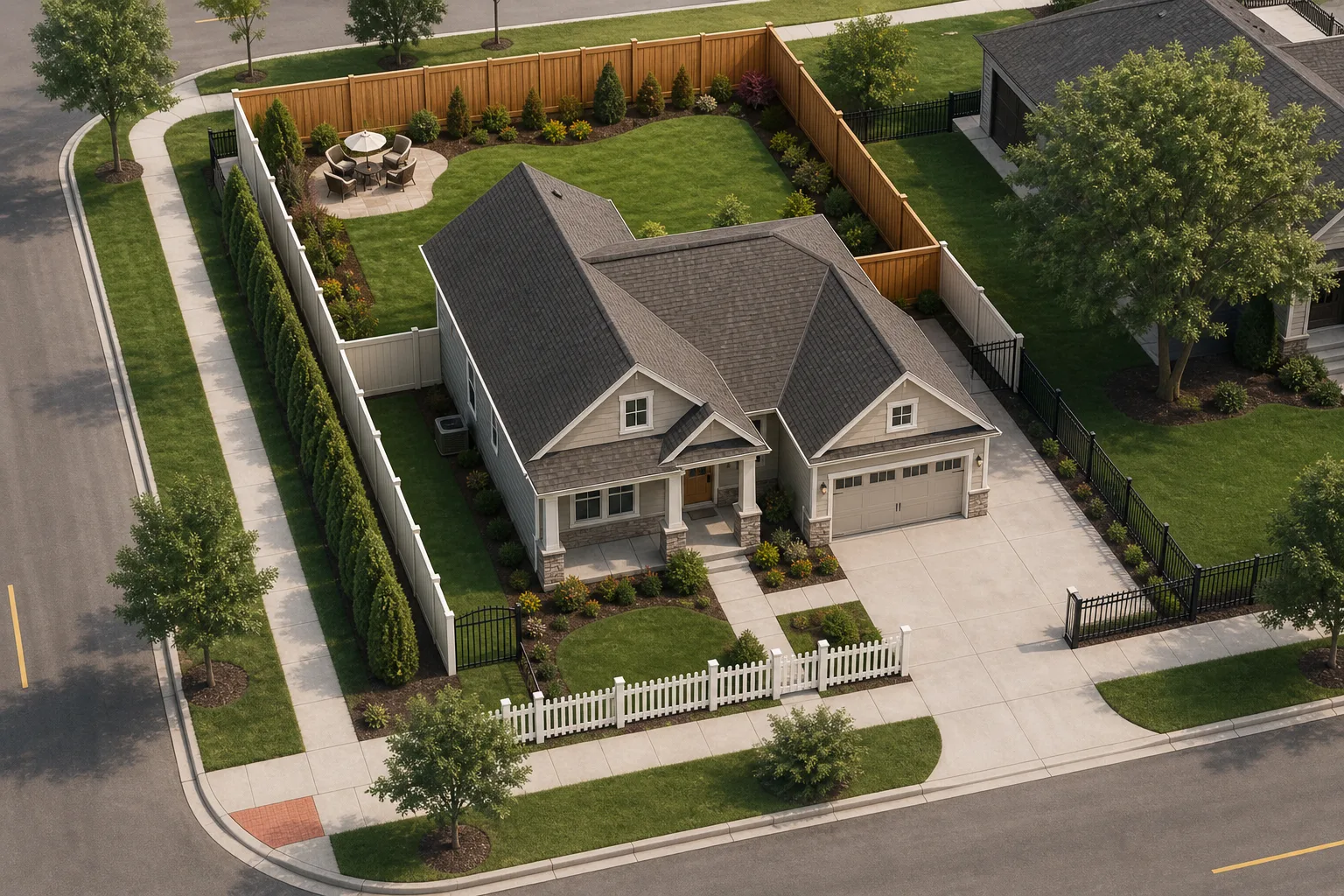
How We Walk You Through Local Yard Rules Before You Commit
When you request a free fence estimate, the conversation does not start with a sales pitch. It starts with your address and your goal, whether that is a privacy fence along the back property line, a decorative aluminum fence near the front walk, or a chain link enclosure for a side yard. From there, the process looks like this:
- Confirm your municipality. Romeoville, Bolingbrook, Plainfield, Lockport, Crest Hill, and Lemont are each handled separately, since code language and permit steps differ by town. See the full coverage list on our service area page.
- Point you to the actual local rules. Instead of summarizing zoning code from memory, we link directly to the relevant permit and yard rule pages for your town so you can read the current requirements yourself.
- Match the fence to the yard category. Front yard, rear yard, and corner lot sections often carry different height allowances, so the plan we estimate reflects where the fence is actually going, not a generic quote.
- Price the materials that fit. Vinyl, wood, aluminum, and chain link all behave differently against height and spacing rules. We factor that into the estimate instead of pricing a fence that might not clear inspection.
Not sure which rules apply to your address? Get a free fence estimate and we will point you to the local guidance first.
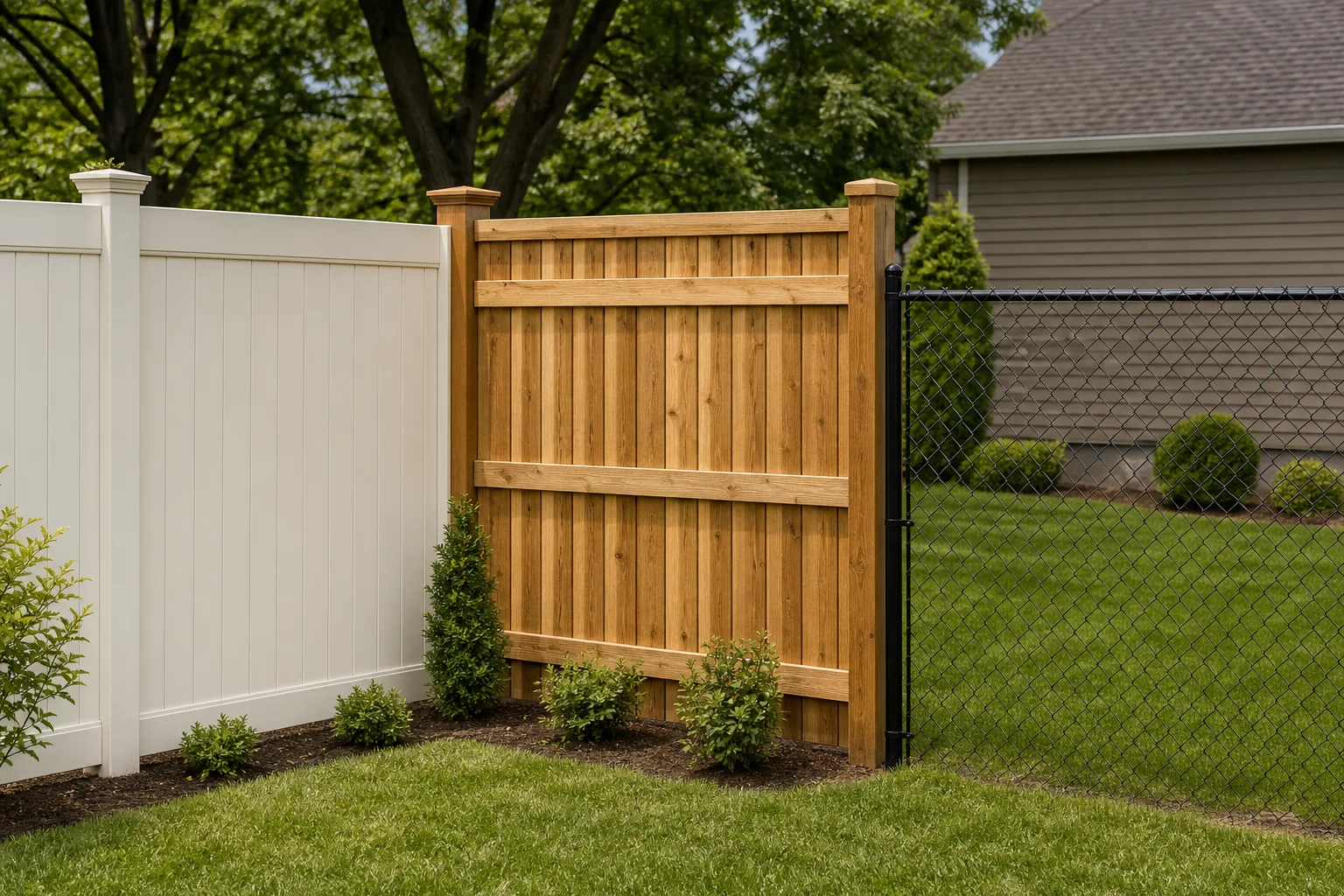
Choosing a Fence Material That Fits Your Yard's Code Category
Yard code is not just about how tall a fence can be. It often touches material, opacity, and placement too. A few real tradeoffs homeowners run into:
- Privacy versus visibility rules. A solid wood or vinyl fence built for privacy may need to step down in height or openness near a front yard or corner lot sight line. If privacy is the main goal, our guide to privacy wooden fence ideas covers layout options that work within tighter height allowances.
- Chain link for utility areas. Chain link is frequently the simplest option for side yards or dog runs where open sight lines are required or preferred. If you are weighing this option, our page for chain link fencing for Bolingbrook, Plainfield, Lockport, Crest Hill, and Lemont residents breaks down when it makes sense.
- Treated wood and budget planning. If cost is the deciding factor between materials, see treated wood fence cost for your area before you lock in a design, since material choice can affect both price and how the fence reads under local code.
If you live anywhere in the broader county, not just our core six towns, our coverage across Will County, IL page explains how we handle towns outside the immediate list.
Why This Approach Beats Guessing or Calling Around
We do not make claims about crews, licenses, or company history on this site, because that is not what answers your actual question. What we do instead is keep the process honest: you get a written or emailed estimate, and you get pointed to the real local permit and yard rule pages so you can verify everything yourself before committing. There is no hidden fee buried in the permit conversation, and no upsell disguised as code advice.
Compare that to piecing together information from generic fence blogs or national suppliers who have never worked a permit desk in Romeoville, Bolingbrook, Plainfield, Lockport, Crest Hill, or Lemont. Local code pages are the only source that actually governs your project, and that is exactly what we link you to.
Common Hesitations, Answered Honestly
"I do not want to deal with permits at all." Some fence projects do not require one depending on height, location, and your specific town. That is exactly why we confirm your municipality first, rather than assuming every project needs the same paperwork.
"What if I build it and it is still wrong?" This is the scenario we are trying to prevent. By checking the local yard rules at the estimate stage instead of after installation, you avoid a fence that has to be moved, shortened, or torn out later.
"Can I just get a price without the code talk?" Yes. If you already know your local requirements, we are happy to quote against your specs directly. The guidance step is there for homeowners who want it, not a mandatory detour.
Get Clear Answers Before You Build
The fastest way to know what code allows in your yard is to start the estimate conversation with your actual address and project in hand. From there you will know which town's rules apply, what materials fit, and what the project will cost, all before anything is installed.
Get a free fence estimate or email us directly at estimates@romeovillefence.com with your address and project details.
Prefer email first? Email for estimate and we will reply with next steps for your town.
Fence Code Questions We Hear Often
Do I need a permit to build a fence in Romeoville or nearby towns?
It depends on the town, the fence height, and where on the property it goes. Since Romeoville, Bolingbrook, Plainfield, Lockport, Crest Hill, and Lemont each set their own permit thresholds, the safest step is confirming your specific address before assuming a permit is or is not required.
Is the height limit different for a front yard fence versus a backyard fence?
In many municipalities, yes. Front yards and corner lots often carry stricter height and visibility rules than rear or side yards. We check which category your installation falls into as part of the estimate process.
Does my HOA rule override the municipal code, or the other way around?
Both can apply at the same time, and the stricter rule usually governs. We focus on pointing you to the municipal permit and yard rule pages; HOA covenants are separate and worth checking directly with your association.
What happens if my fence does not meet local code after it is installed?
This is the outcome the planning step is meant to avoid. Checking local rules before installation is far less costly than relocating or shortening a fence after the fact.